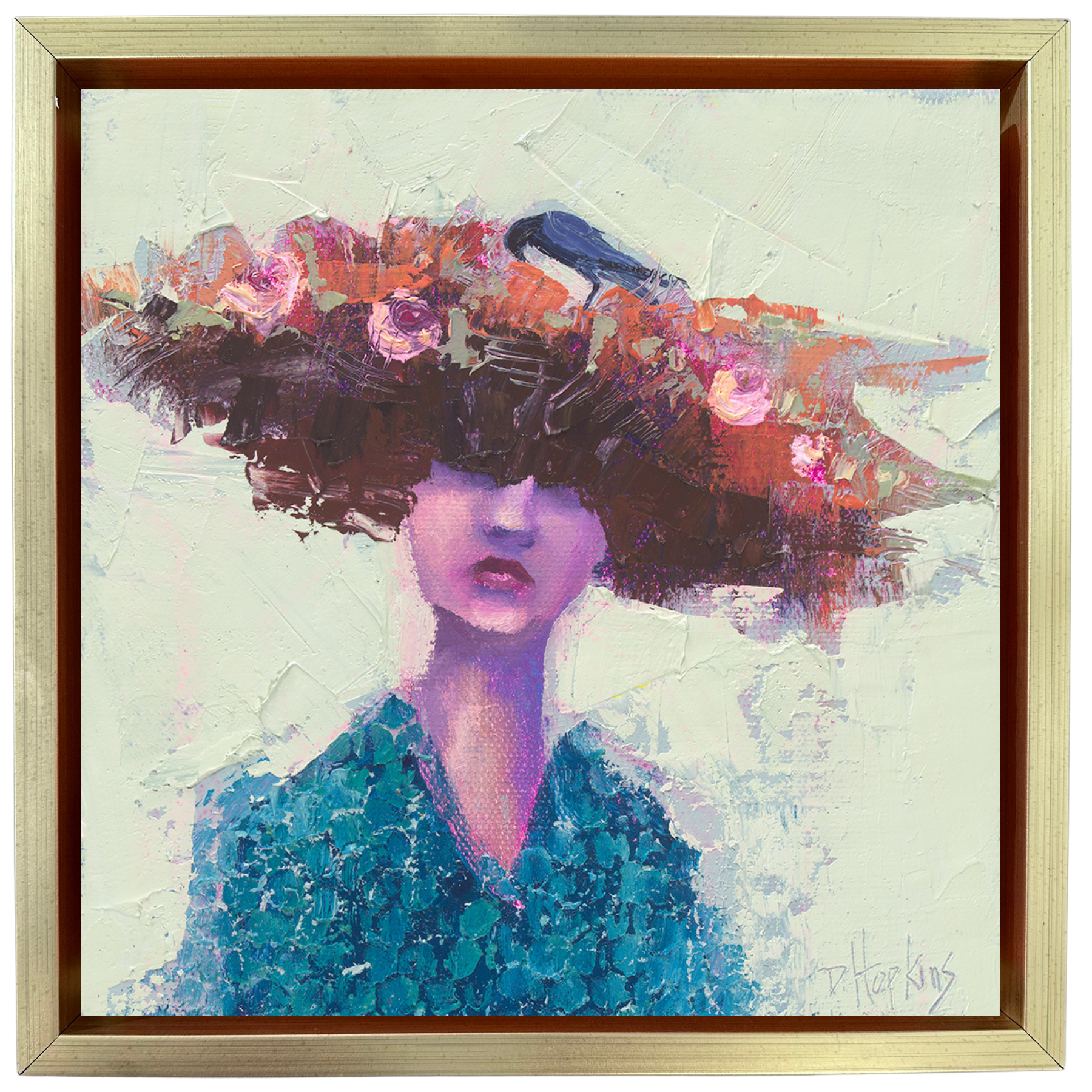
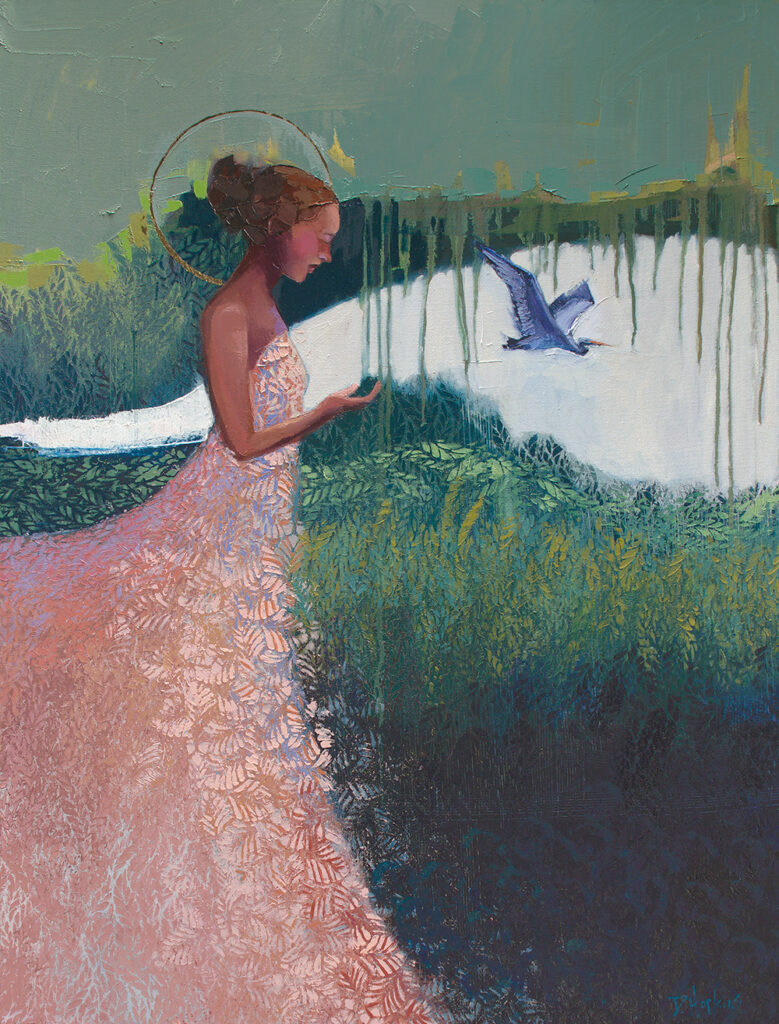
“About Suffering” 8×8, oil on canvas, framed
I first read W. H. Auden’s poem “Musée des Beaux Arts” as a teenager—or maybe in my early twenties. It’s one of those foundational texts for me, the kind that resurfaces again and again over the years, often unexpectedly, but almost always in the presence of tragedy—both personal and communal.
Lately, I’ve been scrolling more than I’d like. Each time, I feel a familiar punch in the gut. Not only from the suffering itself, but from what Auden called its “human position.” In this moment we’re living in, there seems to be an added layer: not just the impulse to look away, but the urge to explain, justify, or deny what we’re seeing.
When this painting emerged a little more somber than usual, I wasn’t surprised. And when it came time to add the bird—an element I return to again and again as a symbol of spirit—I knew it couldn’t be my usual choice. For me, birds often stand in for the spirit of those we’ve loved and lost, the Holy Spirit, or the quiet forces of love, change, and renewal. This time, I chose a raven.
I don’t know how we become people other than the ones Auden wrote about—people who continue eating, working, sailing calmly on while someone else falls from the sky. But I do know this: we matter to one another. And as another poem I love reminds us, “Any man’s death diminishes me, because I am involved in mankind.”
That truth feels especially close right now. This painting holds that weight—not as an argument, but as a witness. An acknowledgment that suffering happens alongside ordinary life, and that noticing it, even quietly, is its own small act of resistance.
Musée des Beaux Arts
W. H. Auden (December 1938)
About suffering they were never wrong,
The Old Masters: how well they understood
Its human position; how it takes place
While someone else is eating or opening a window or just walking dully along;
How, when the aged are reverently, passionately waiting
For the miraculous birth, there always must be
Children who did not specially want it to happen, skating
On a pond at the edge of the wood:
They never forgot
That even the dreadful martyrdom must run its course
Anyhow in a corner, some untidy spot
Where the dogs go on with their doggy life and the torturer’s horse
Scratches its innocent behind on a tree.
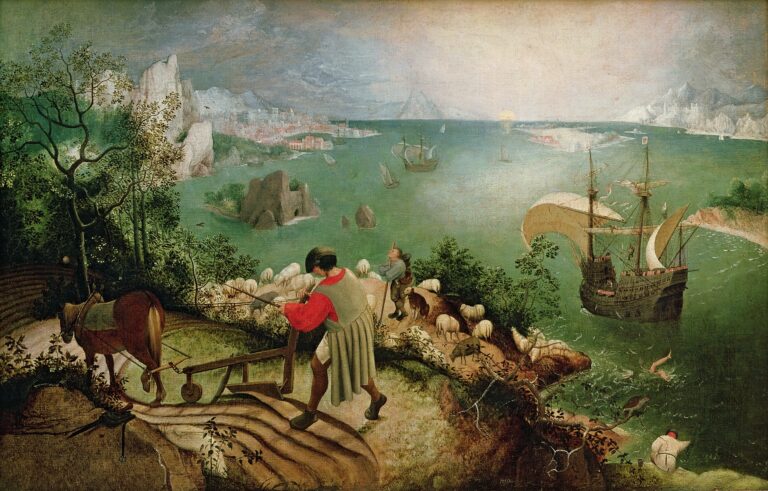
In Brueghel’s Icarus, for instance: how everything turns away
Quite leisurely from the disaster; the ploughman may
Have heard the splash, the forsaken cry,
But for him it was not an important failure; the sun shone
As it had to on the white legs disappearing into the green
Water; and the expensive delicate ship that must have seen
Something amazing, a boy falling out of the sky,
Had somewhere to get to and sailed calmly on.