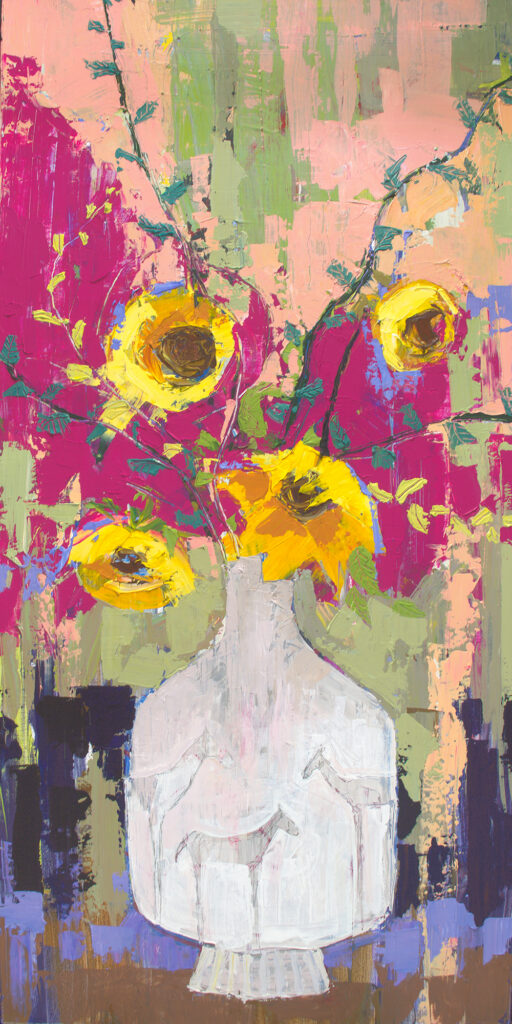
I’ll just come out and say it: I have never particularly cared for still life paintings. As it turns out, neither did the patriarchy.
In the seventeenth century, the French Academy formalized a hierarchy of painting subjects. At the top sat history painting and portraiture. At the very bottom? Still life. Because women artists were generally barred from studying the nude human form—the foundation of the grand historical, mythological, and religious scenes prized by the Academy—they were often pushed toward subjects considered less important: flowers, fruit, table settings, and objects from domestic life.
Women Artists and the History of Still Life Painting
Even generations later, women artists continued to face restrictions that shaped what they could paint. While Impressionism offered more opportunities than many academic institutions, women were still expected to navigate a world of chaperones and social rules. The cafés, bars, and bustling public spaces that became the backdrop of so many Impressionist masterpieces were often inaccessible to them.
To make matters worse, the subjects women painted were frequently used as evidence that they were somehow less serious artists. Still life paintings, despite requiring extraordinary skill and observation, were dismissed as minor works.
What has made me come around to still life painting is learning how women artists used it—not because it was necessarily their first choice, but because it was what was available. They transformed ordinary objects into vehicles for storytelling, self-expression, and quiet resistance.
Case in point: Clara Peeters (c. 1594–1657), one of the great still life painters of the Dutch Golden Age, famously tucked tiny self-portraits into the reflective surfaces of pewter jugs and silver goblets. In works like Still Life with Cheeses, Almonds and Pretzels, she inserted herself into a genre that often rendered both artist and subject invisible. It was a subtle but powerful assertion of authorship and identity.
Tell me a great story with every grandiose tool and resource at your disposal and I’ll happily be impressed. Tell me a great story with nothing more than an apple or two and a well-placed vase? I’m smitten.
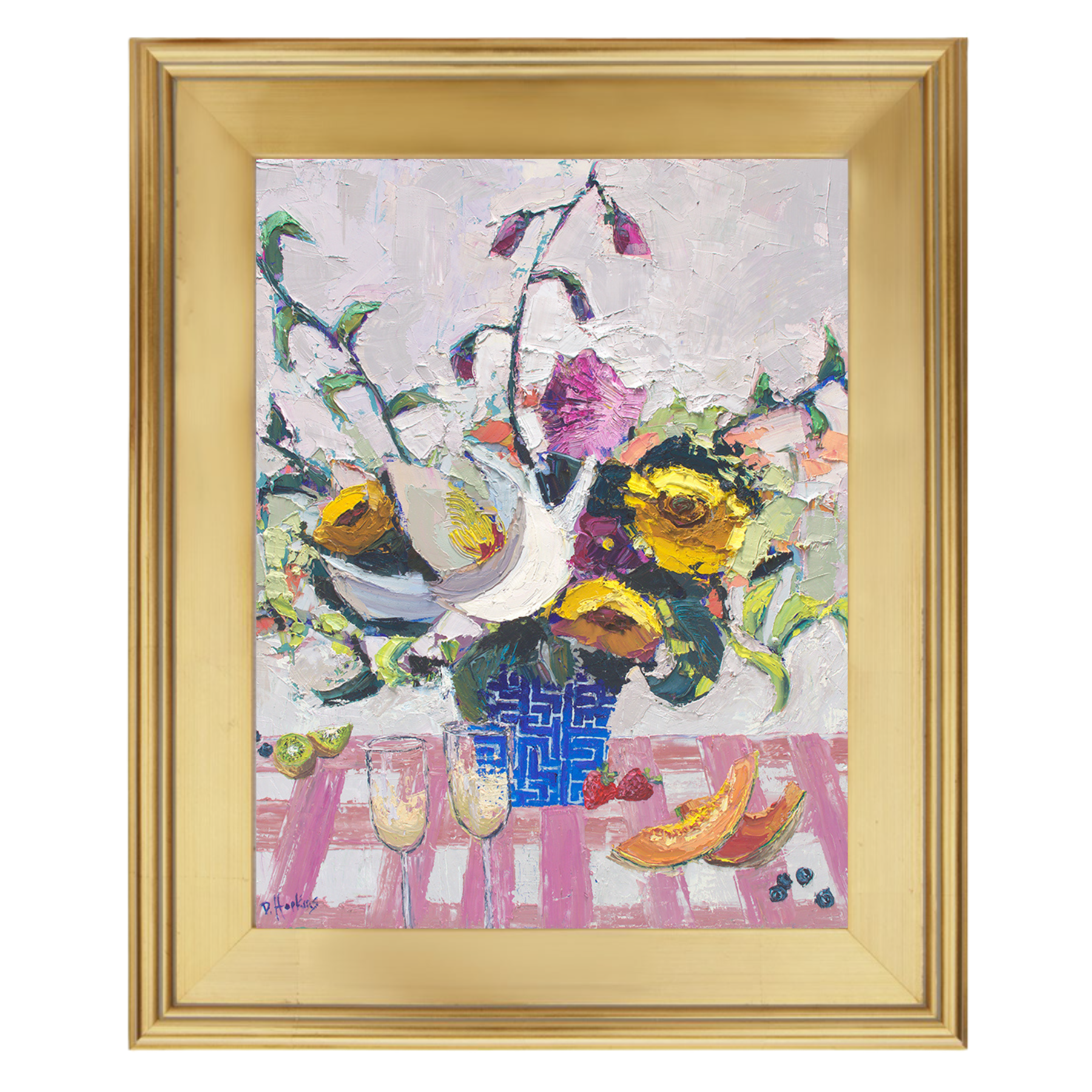
The Story Behind “Can’t We Elope”
I wish I could tell you that my first still life painting since college contains hidden symbols, coded messages, or some profound statement about the placement of the blueberries. It does not.
What it does do is celebrate ordinary, everyday subject matter—quite literally part of my breakfast—as a nod to the women artists who came before me. Women who were told their worlds were too small, too domestic, or too ordinary to deserve a canvas, and who painted them anyway.
What power doesn’t always understand is that truth and beauty dwell as much in the small as they do in the grandiose. The play of shape, color, light, and texture is profoundly democratic. We all have access to it.
This contemporary still life painting became less about fruit and flowers and more about permission: permission to make art from the life directly in front of you.
Finding Beauty in Everyday Life
I wish we could all occasionally elope from the roles assigned to us. (Yes, I am so very proud of the title of this piece).
Art is often an act of breaking free—a journey into the heart of things we assume we already understand. A bowl of fruit. A vase of flowers. A kitchen counter. Sometimes these ordinary things reveal themselves to be far more interesting than we first imagined.
I am forever grateful to the people who create with limited resources and still insist they have something valuable to say, even when the world suggests otherwise.
I can’t promise I’ll become a devoted still life painter. I may never paint another one.
But I will say this: here’s to the artists who paved the way for those who came after them, and here’s to finding beauty everywhere—even on the kitchen counter.
Artist Note
Inspired by the history of women artists and still life painting, Can’t We Elope honors the quiet power of everyday objects and reminds us that truth and beauty often reside in the smallest moments.