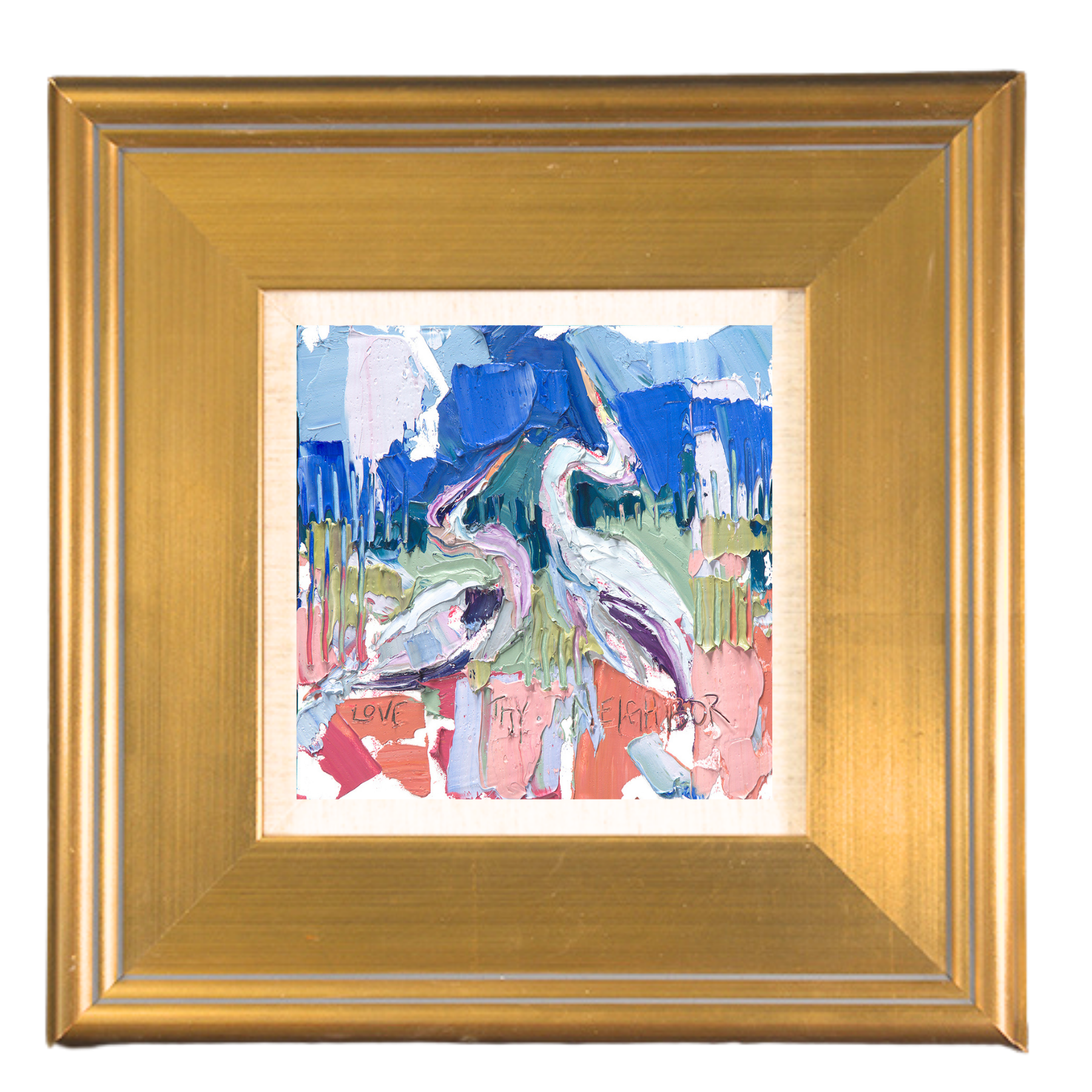
I tend to paint thickest when I am most uncertain. The thoughts and fears that run wild in my mind are often unmanageable because they have no physical form; they cannot be tamed. And so I apply thick, oozing paint, dig into it, mold it—soothing my nerves with something so physically real it rises off the surface of the panel.
This abstract impasto painting came from a place of sitting with that uncertainty.
I’m thinking about two things today. The first is the parable of the Good Samaritan, in which the scholar of the law asks Jesus, “Who is my neighbor?” because he wishes to justify himself. The neighbor, spoiler alert, is the one he has been taught to despise—the one who shares nothing in common with him. The lesson is not just that the Samaritan acted with mercy, but that the one who acted with mercy was the Samaritan, completely outside the scholar’s idea of who a neighbor could be.
The second thing I’m thinking about is Mary Oliver’s poem Franz Marc’s Blue Horses, in which she imagines herself entering the world of that painting. She writes:
Maybe our world will grow kinder eventually.
Maybe the desire to make something beautiful
is the piece of God that is inside each of us.
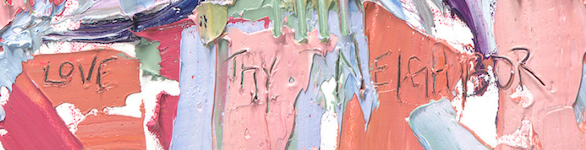
Into today’s painting, I scratched the words “Love Thy Neighbor,” because I can’t get it out of my head. It feels like a simple—and still impossible—answer to something.
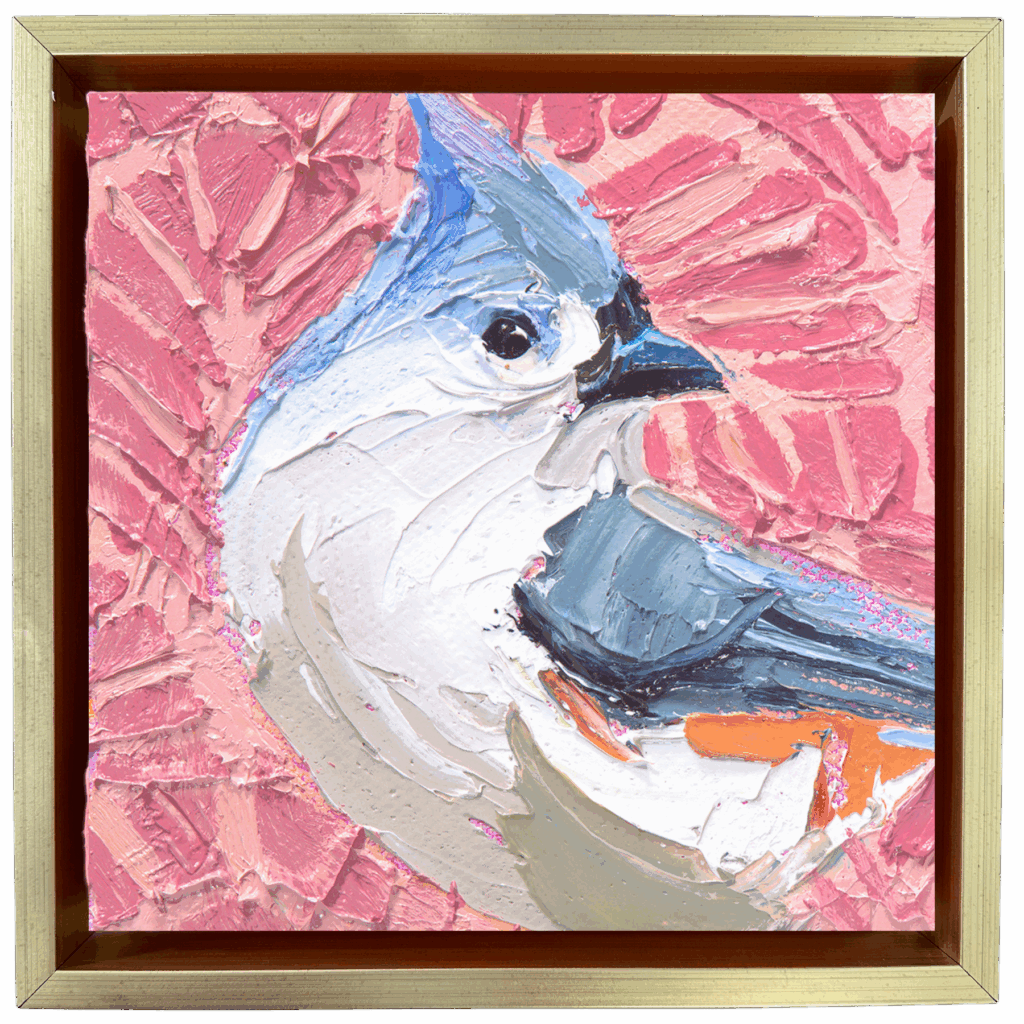
I’ve been drawing small bird outlines in my sketchbook lately, interested mostly in the shapes created by their interactions—the spaces formed between them. This painting comes from those sketches.
It seems impossible, but maybe all this scratching into surfaces, moving color around, and hoping for some beauty to emerge—maybe this is the piece of God that is inside me. And maybe it’s the piece that will help me see neighbors in the faces of those I’m told are no such thing, and to whom I supposedly owe no mercy.

What we lose when we make art is infinite possibility—but what we gain is something real. A reflection on risk,...
What we lose when we make art is infinite possibility—but what we gain is something real. A reflection on risk,...
What we lose when we make art is infinite possibility—but what we gain is something real. A reflection on risk,...